
Category: Articles
20 Best Employee Performance Management Software in 2025
TABLE OF CONTENT :
Many companies still use annual reviews, paper forms, or manual tracking. These methods are slow, inconsistent, and often unfair.
Managers cannot give feedback on time, employees lose connection with their goals, and businesses miss chances to improve productivity.
In fact, 82% of HR leaders say their current systems don’t meet their main goals. And 62% believe these systems are not keeping up with today’s business needs.
In 2025, when success depends on how well you manage talent, old performance management practices can hold you back.
This is why companies are now choosing an employee performance management system.
In this blog, we will show you the 20 best employee performance management software in 2025 to help you solve these problems and grow your business.
What is Employee Performance Management Software?
Employee Performance Management Software is a digital tool that helps organizations set SMART goals, track progress, hold regular check-ins, collect 360-degree feedback, and create performance reports.
These performance measurement tools also make work fair and transparent. Employees clearly see what is expected. Managers can spot strengths and skill gaps. HR teams can make smart decisions about promotions, training, and pay based on real data.
Gartner said that over 70% of companies now use performance management tools to give real-time feedback and keep employees motivated.
Big companies like Google and Microsoft already use performance management systems to improve engagement and productivity.
Features of Employee Performance Management System Software

Employee Performance Management tool comes with many features that help HR teams, managers, and employees stay on track and reach their goals.
- User-Friendly Interface: A simple navigation interface makes it easy for managers and employees to use the software to reduce mistakes and missed reviews.
- Goal Setting and Tracking: The tools help set SMART goals and link them to company objectives. Employees know exactly what to do, and managers can track progress in real time.
- 360-Degree Feedback: Employees get feedback from peers, managers, and subordinates, which gives a complete view of performance and makes evaluations fairer.
- Real-Time Feedback: Instant recognition and feedback keep employees motivated. Problems can be fixed early, and employees can grow quickly.
- Performance Review Automation: Automating reviews ensures they happen on time and are consistent. It saves HR time and makes scheduling easier.
- Customizable Review Templates: You can create review forms that match your company’s needs. This makes evaluations more relevant and useful.
- Analytics and Reporting: Analytics show performance trends, engagement, and productivity. Reports help managers make smart decisions about promotions, training, and employee growth.
- Integration Capabilities: Good software works with HR systems, project tools, and collaboration apps, which keep data connected and workflows smooth.
- Security and Privacy: Employee data should be safe. Reliable staff appraisal tools protect information and keep your company compliant.
- Mobile Accessibility: Employees and managers can use the software anytime, anywhere. This keeps everyone engaged and connected, even on the go.
- AI-Powered Insights & Suggestions: Use AI to study performance patterns and give useful recommendations. This helps with coaching, recognition, and skill development.
- Learning & Development Recommendations: Suggest training or skill-building programs based on performance. This helps employees grow and reach their career goals and company objectives.
10 Best Employee Performance Management Software
Here is the 10 best performance management system software list:
- TechForing Human
- Lattice
- PerformYard
- ClearCompany
- Leapsome
- PeopleGoal
- Trakstar
- Culture Amp
- SAP SuccessFactors
- 15Five
Now, we will break down their key features, advantages, disadvantages, and pricing details, so you can easily compare them and choose the best one.
1. TechForing Human - Best Performance Management Software for Teams
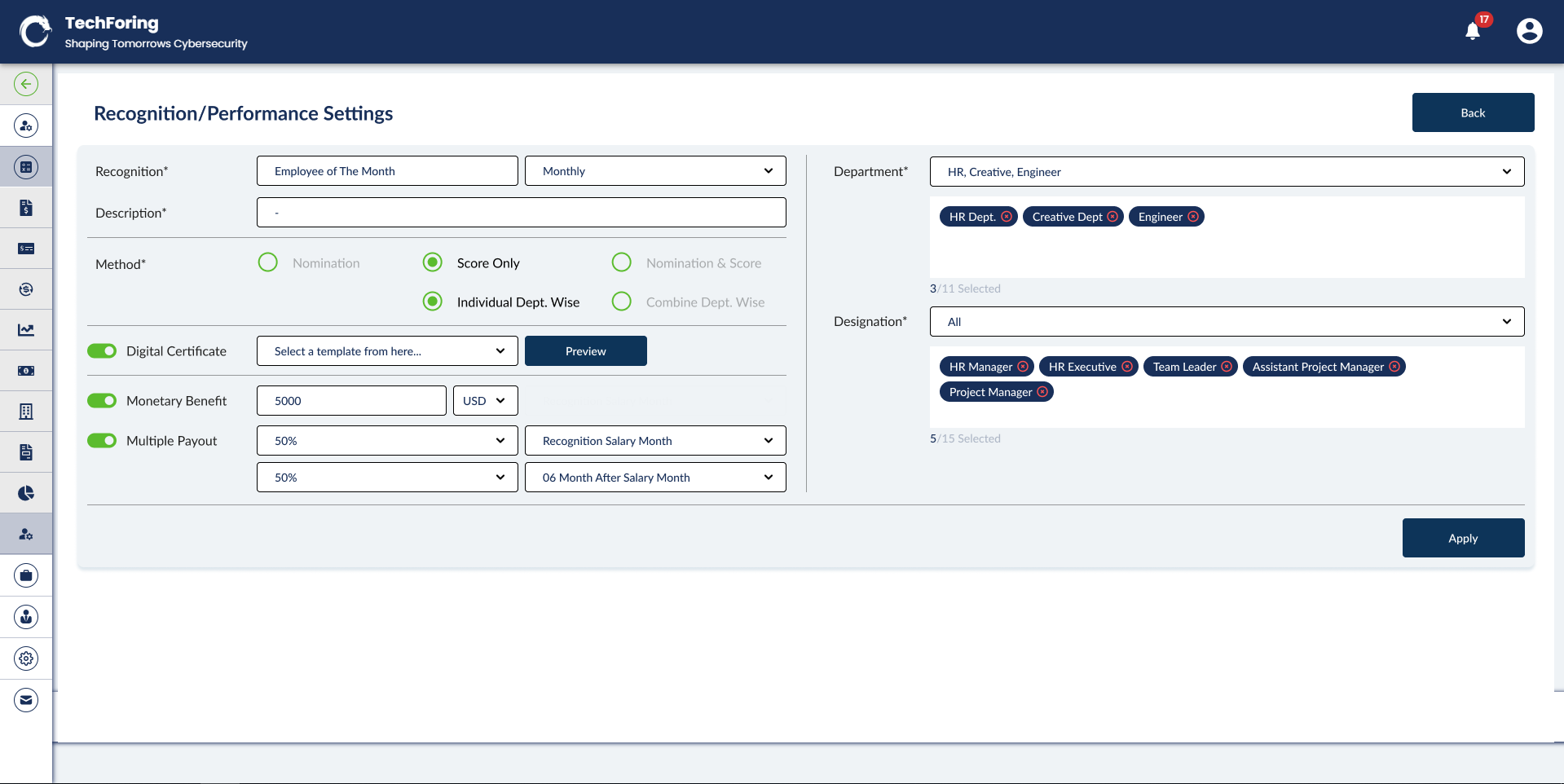
TechForing Human is a complete Human Resource Management Software that helps you manage all employee information in one place. You can track attendance, leave, training, and performance easily without any hassle.
This software is perfect for all types of businesses, from small startups to large companies. You can use it in IT, retail, manufacturing, service industries, and many more.
Key Features
Employee Management, Attendance Management, Performance Management, Noticeboard Management, Report Management, Training Management, Employee Self-Service Portal, Onboarding and Offboarding Workflows, Analytics and Reporting, Shift Scheduling, Audit Logs and Change Tracking, and Mobile Accessibility.
Pros
TechForing Human helps you improve HR efficiency by saving time, reducing manual errors, and supporting better decision-making. It also helps you recognize and develop employees through performance insights and AI suggestions.
Pricing - Start at $99/month for up to 20 users.
2. Lattice - Best Performance Evaluation Software for Tech Companies
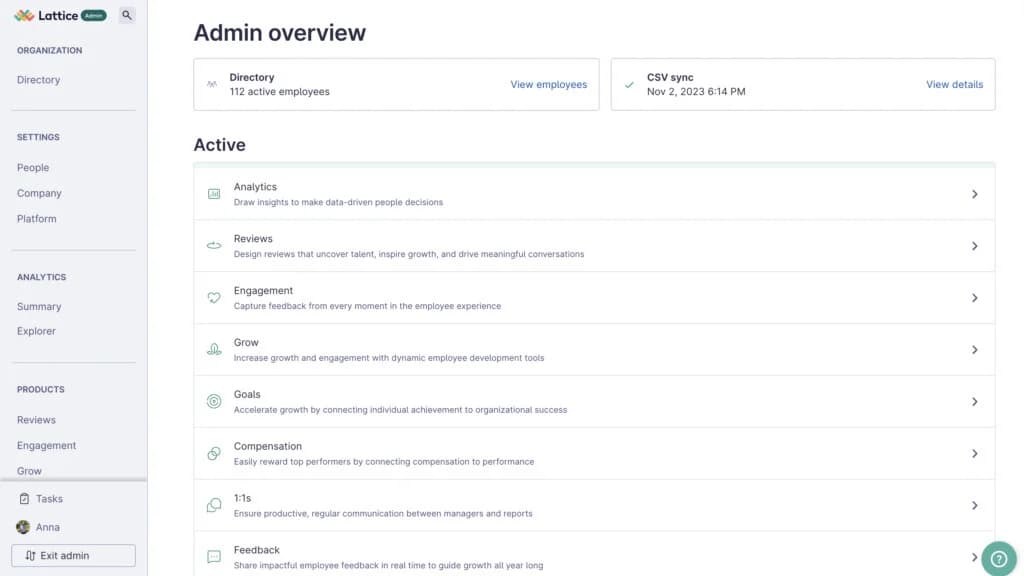
Lattice is a people management platform that helps you build high-performing teams and create a positive workplace. It gives you tools for performance reviews, feedback, goal setting, and employee development.
Lattice works well for mid-sized to large companies in technology, consulting, healthcare, fintech, banks, credit unions, professional services, and tech companies.
Key Features
Performance Reviews, Talent Reviews, 1:1s, Feedback, Praise, Updates, OKRs & Goals, Succession Planning, Performance Improvement Plans (PIPs), Analytics, Individual Development Plans, Onboarding and Exit Surveys, eNPS (Employee Net Promoter Score), Pulse Surveys, Engagement, Lattice AI, and Integrations.
Pros and Cons
Lattice has a user-friendly interface, detailed analytics, continuous feedback, customizable reviews, strong goal alignment, smooth integrations with tools like Slack and Outlook, and AI-powered insights to help you make better HR decisions.
On the other hand, new users may need some time to learn all the features; it may not have all the HRIS functions like payroll. The platform can feel complex for small organizations, and calendar syncing can sometimes cause issues with 1:1 meetings.
Pricing - Start at $10/month, and a free demo is available.
3. PerformYard - Best Employee Performance Review Software for Consulting Firm
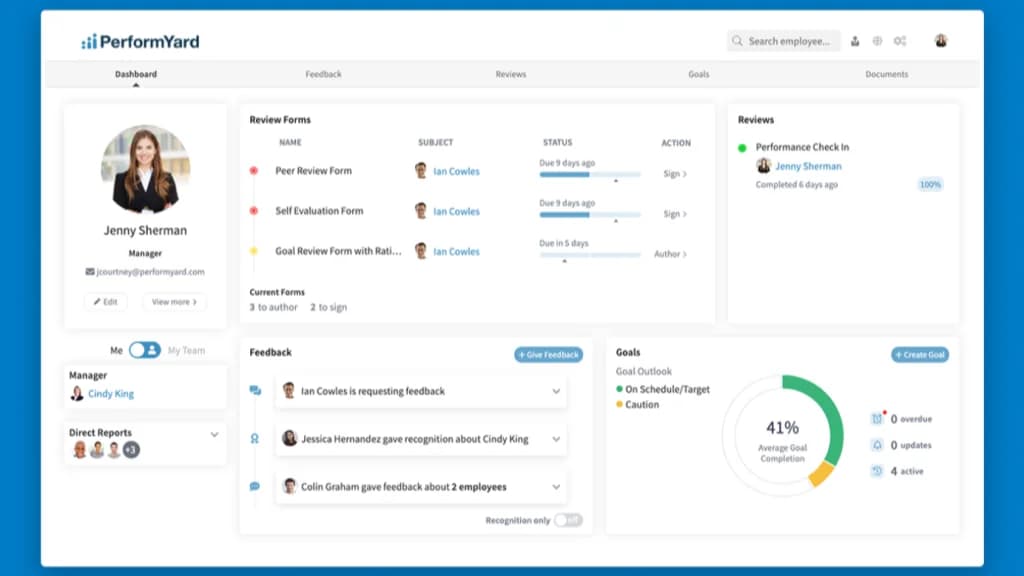
PerformYard is an employee performance management software that helps you manage employee reviews, track goals, and give feedback. It has a user-friendly interface and customizable features, so you can fit it to your company’s needs.
PerformYard is especially useful for service-based companies, SaaS businesses, and IT consulting firms, where project-based reviews and flexible feedback are important.
Key Features
Performance Reviews, 360° Feedback, Goal Management (OKRs & KPIs), Continuous Feedback, Check-Ins, Customizable Review Cycles, Real-Time Dashboards, Individual Development Plans, Activity Tracking and Alerts, Approval Process Control, Appraisal History, Assessment Management, Alerts/Notifications.
Pros and Cons
The platform is user-friendly, with an intuitive interface for both managers and employees. You can customize review cycles and forms, give 360° feedback, track goals, use continuous feedback, view real-time dashboards, and access everything on mobile.
On the other hand, PerformYard may not have some advanced features that larger enterprise solutions offer. Integration options are available, but are more limited compared to other platforms.
Pricing - Start at $5-10/month, and a free demo is available.
4. ClearCompany - Best Employee Performance Evaluation Software for Nonprofit Organizations
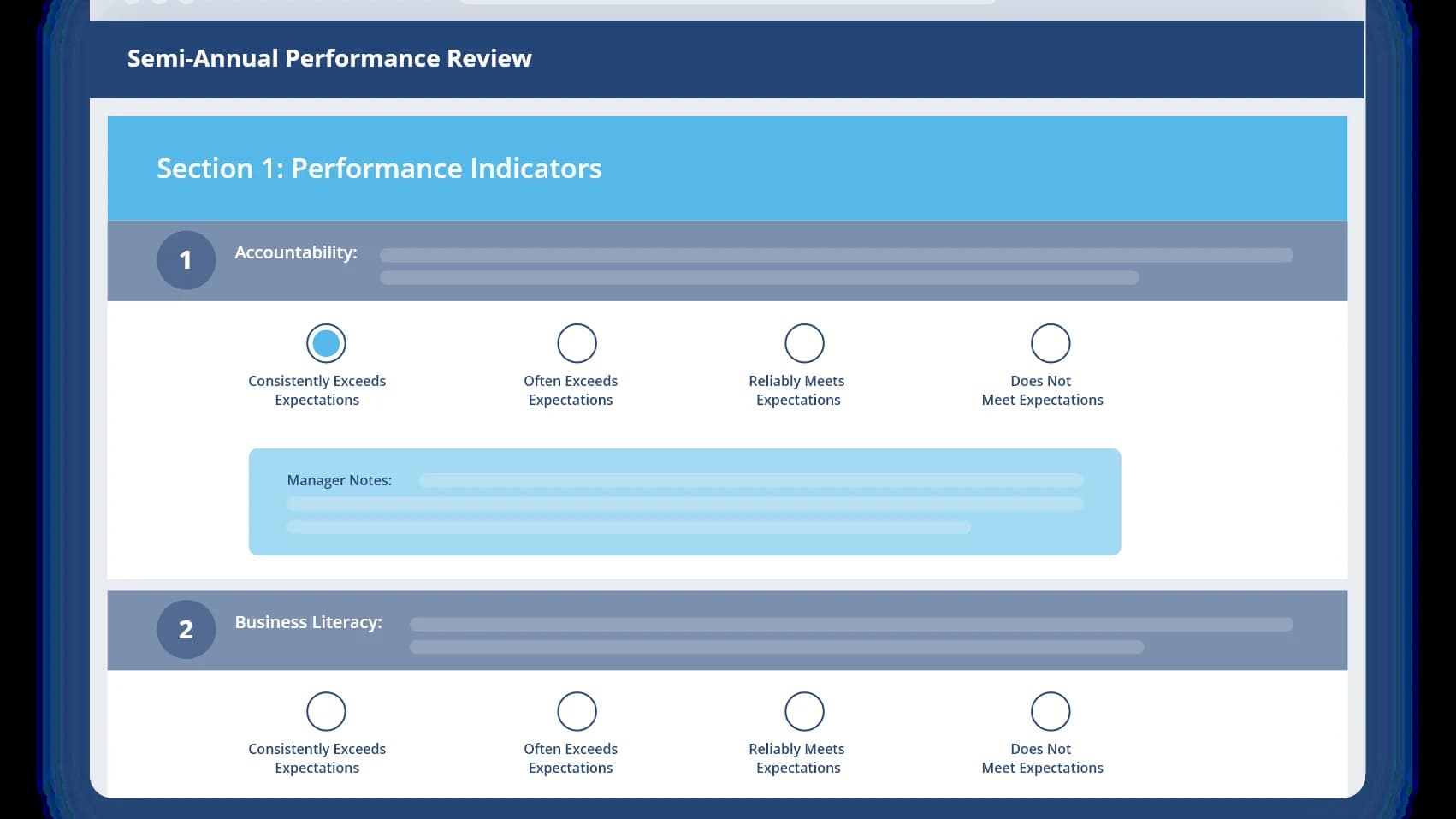
ClearCompany is a complete talent management platform that handles hiring, onboarding, performance management, and employee engagement all in one place. You can manage the total employee lifecycle from recruitment to performance tracking and engagement.
ClearCompany works best for medium to large organizations across many industries, including Education, Engineering, Energy, Franchise Operations, Healthcare, Hospitality, Manufacturing, Nonprofit Organizations, Real Estate, Retail, and Technology.
Key Features
Performance Management, Annual Reviews, Semi-Annual Reviews, Quarterly Progress Check-Ins, 360 Reviews, New Hire Reviews, Goals, and Role-Based Reviews, Cycle Progress, Employee Goal Use & Progress, Goal Alignment, Employee Score Trends, Manager Scoring, 360-Degree Reviews Cycle Progress, 9-Box Reporting.
Pros and Cons
ClearCompany has a user-friendly platform with customizable tools, engagement features like surveys and 1:1 workspaces, recognition tools to celebrate employee milestones, and a complete talent management system to recruit, develop, and retain your employees.
On the other hand, the platform needs some time for initial setup, and some features require training to use well.
Pricing - Custom-based, and a free demo is available.
5. Leapsome - Best Performance Management Software for Small Business
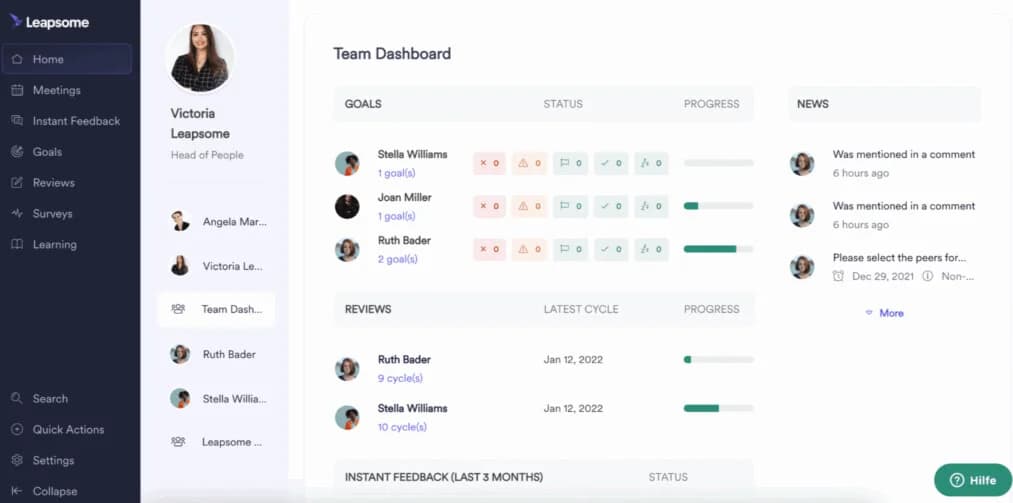
Leapsome is a performance review software that can set up review cycles like 360-degree, project-based, or leadership reviews with simple templates and question banks. With dashboards, Leapsome makes the review process simple, transparent, and helpful for both managers and employees.
This tool is best for industries such as Technology, Startups, E-commerce, Healthcare, Education, Consulting, Finance, Retail, Manufacturing, and Professional Services.
Key Features
Performance Reviews, 360° Feedback, OKRs & Goal Setting, Continuous Feedback, 1:1 Meetings, Learning & Development, Employee Engagement Surveys, Compensation Management, Competency Frameworks, Instant Feedback, People Analytics, HRIS & Core HR, AI-Powered Insights, Customizable Dashboards, Mobile Accessibility.
Pros and Cons
Leapsome gives strong customer support and integrates with over 75 other tools like BambooHR, Slack, and Microsoft Teams to make your workflows smooth.
On the other hand, some users find a steep learning curve when setting up and customizing features.
Pricing - Start from $8/month, and a 14-day free trial is available.
6. PeopleGoal - Best Performance Review Software for Small Companies
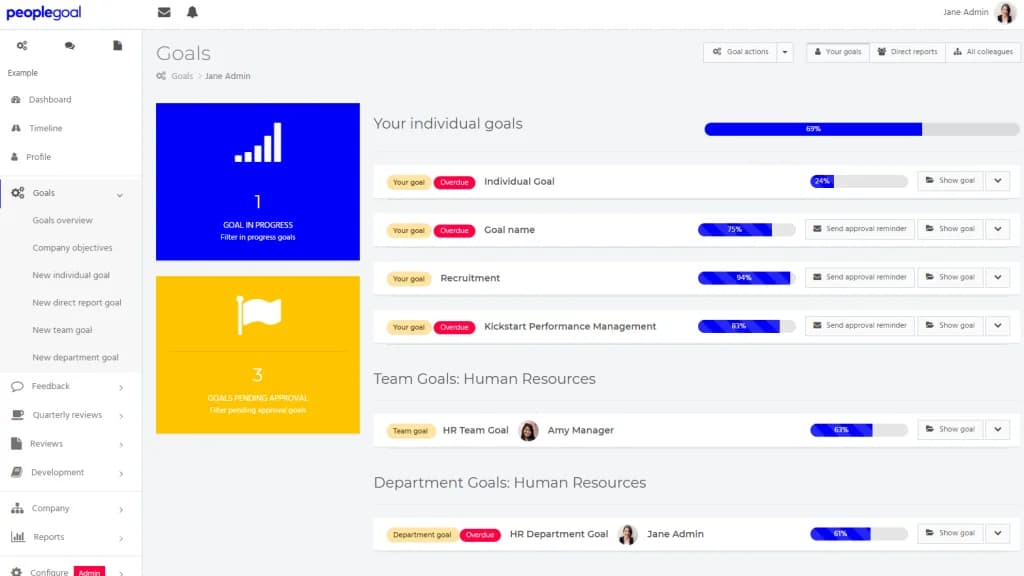
PeopleGoal is a complete performance management platform that helps you align employee goals with your company's objectives. With its easy-to-use and customizable interface, PeopleGoal allows managers and HR teams to give timely feedback, recognize achievements, and help employees grow in their careers.
PeopleGoal works really well for industries such as technology, healthcare, finance, consulting, education, retail, manufacturing, professional services, fintech, banking, logistics, and telecommunications.
Key Features
SMART Goals, Cascading Tasks, 360-Degree Feedback, 1-to-1 Meetings, Real-Time Performance Tracking, Recognition & Rewards, Pulse Surveys, Engagement Surveys, Personal Development Plans, Skill & Competency Tracking, Coaching & Mentorship Programs, Career Pathing Tools, Succession Planning, Centralized Employee Records.
Pros and Cons
PeopleGoal is very flexible and easy to use. Many users also say the customer support is very helpful and quick to respond.
At the same time, PeopleGoal has a few downsides. Some users say it has limited integration options, so it may not work with every third-party app.
Pricing - Start from $4/month, and a 7-day free trial is available.
7. Trakstar - Best App for Talent Evaluation Processes in The Service Sector
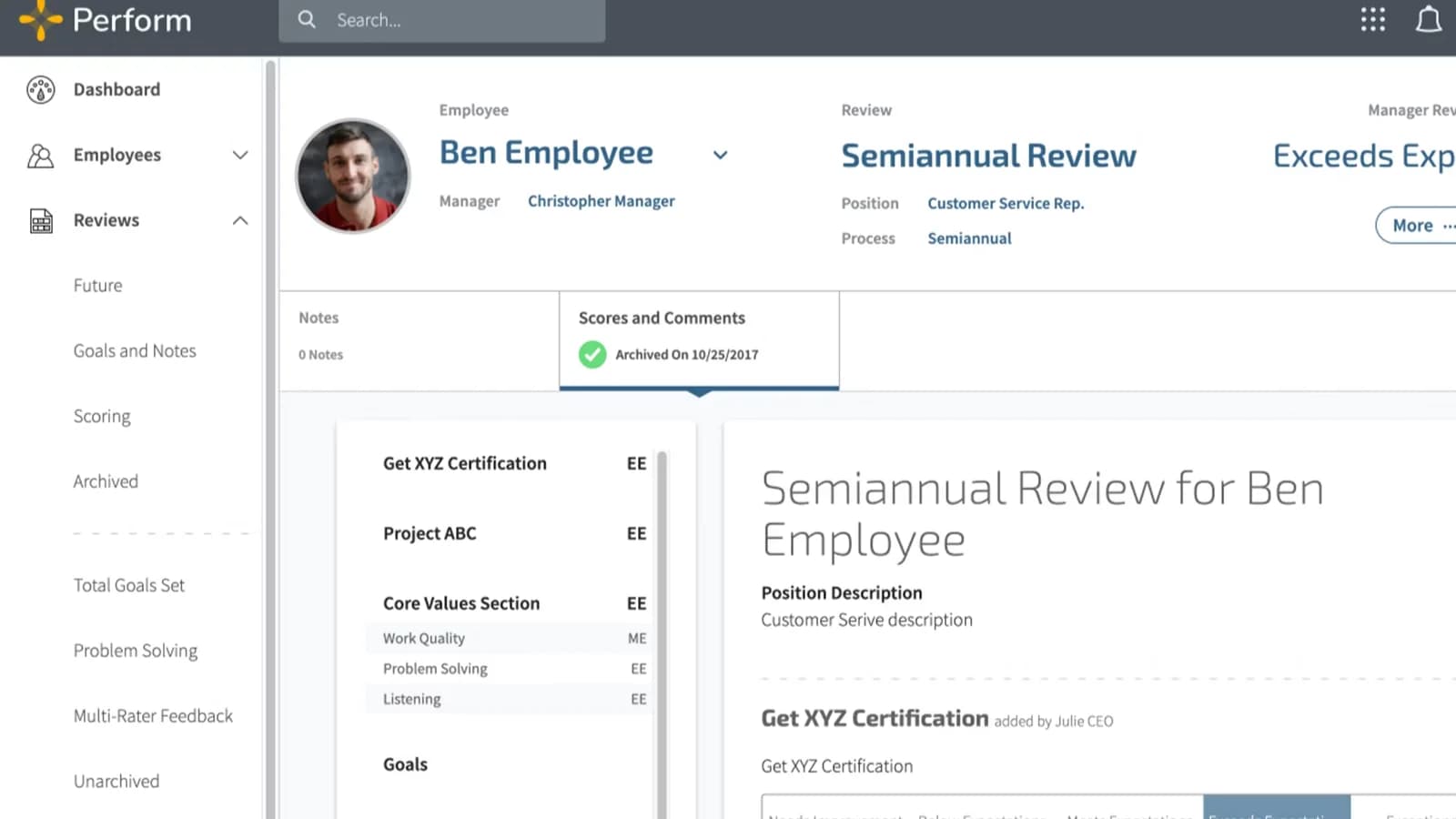
Trakstar is a complete talent development platform that has four main modules: Hire, Learn, Perform, and Insights. The Perform module focuses on performance management. You can do performance reviews, set goals, collect 360-degree feedback, and give continuous feedback.
Trakstar is great for technology, healthcare, finance and banking, education, retail and e-commerce, professional services, manufacturing, government, hospitality, non-profits, construction, and transportation and logistics.
Key Features
360° Feedback, SMART Goal Setting, Automated Performance Reviews, Employee Self-Appraisals, Engagement Surveys, Real-Time Reporting & Analytics, Continuous Feedback Mechanism, Integration Capabilities, Performance Reviews, Automated Reminders, Detailed Reporting with Insights, Goal Setting & Tracking.
Pros and Cons
Trakstar is known for its easy-to-use interface that makes it simple for both HR teams and employees to navigate. Trakstar works well with other HR systems, which keeps your data connected and your workflow smooth.
Some users find the platform a bit complex at first because it has so many tools. Customization of templates can be limited in some cases.
Pricing - Custom-based, and a free demo is available.
8. Culture Amp - Best Corporate Performance Management Software
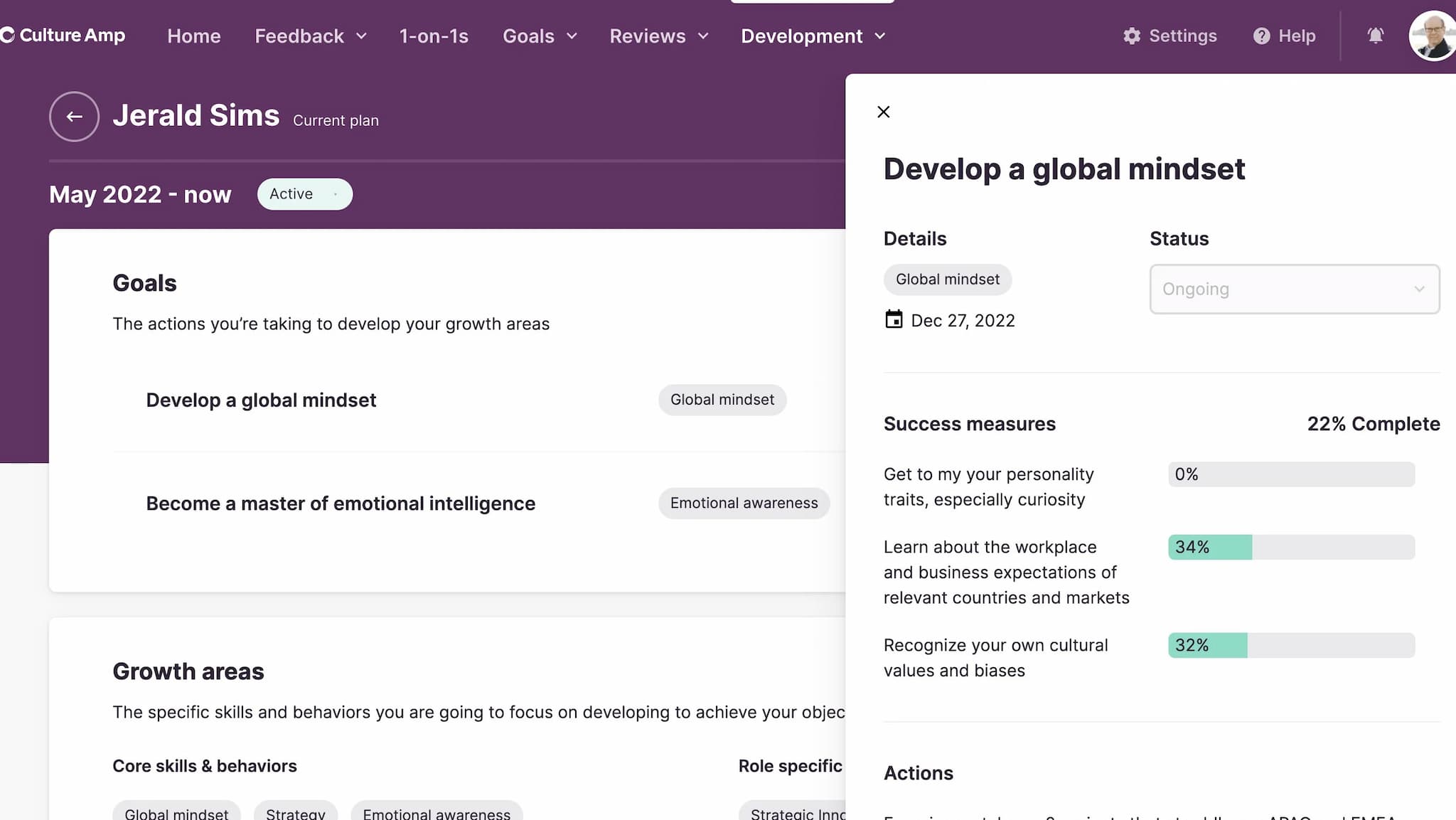
Culture Amp is a top employee experience platform that helps you improve engagement, performance, and your workplace culture. It uses data and tools like continuous feedback, performance reviews, goal setting, and people analytics to support managers and HR teams.
Culture Amp works well for many industries, including Technology & Software, Healthcare, Retail & Consumer Goods, Education & Nonprofits, Hospitality & Entertainment, Real Estate, and Transportation & Logistics.
Key Features
Continuous Feedback & Real-Time Recognition, Performance Reviews & Calibration, 1:1 Conversations & Development Analytics, Goal Management & OKRs, AI-Powered Insights & Feedback, Career Paths & Competency Frameworks, Retention Insights & DEI Surveys, Benchmarking & Industry Comparisons.
Pros and Cons
Culture Amp can scale with your company, so it works well for small teams and large organizations that want data-driven ways to improve workplace culture.
At the same time, Culture Amp has a few challenges. Setting up surveys can take time and be a little complicated. Notifications for new feedback do not always arrive on time.
Pricing - Custom based on the number of employees.
9. SAP SuccessFactors - Best People Development Software for Education and Research
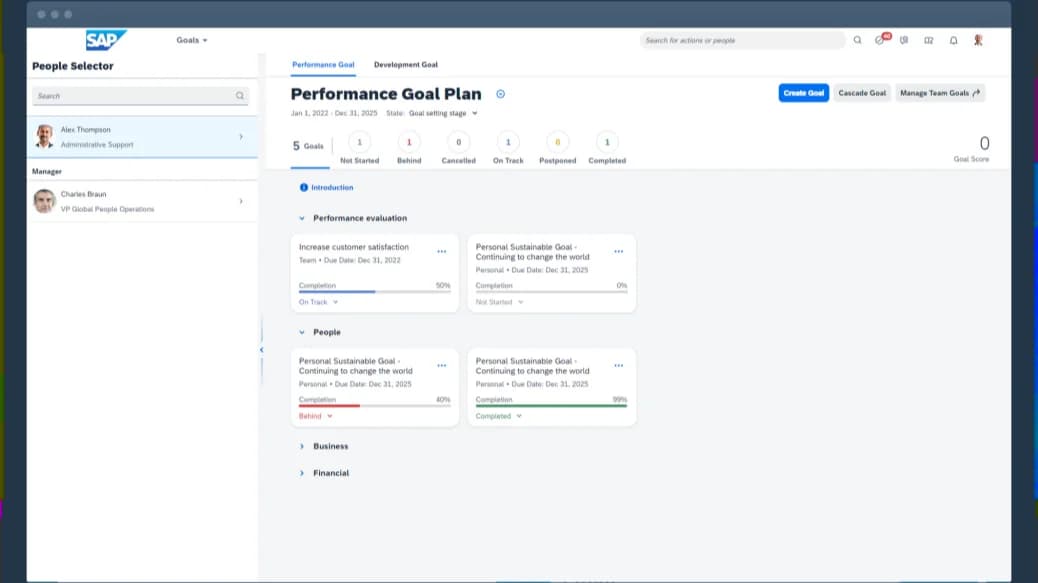
SAP SuccessFactors is a cloud-based Human Experience Management system that helps you manage your workforce in one place. It brings together HR tasks like talent management, learning and development, performance tracking, and people analytics in a single platform.
This platform works well for industries such as technology & software, healthcare & pharmaceuticals, financial services & banking, manufacturing & industrial, retail & consumer goods, and hospitality & tourism.
Key Features
AI-Enabled Goal Management, Continuous Performance Management, 360-Degree Feedback & Performance Reviews, Objectives and Key Results (OKRs), Skills-Based Performance Assessment, Integrated Learning and Development, Mobile Accessibility, Global Compensation Planning, Timely Rewards, and Recognition.
Pros and Cons
SAP SuccessFactors is a full, cloud-based HR and talent management system that works best for big companies. The platform connects well with other SAP systems and handles global operations with multi-language support.
Even with its strengths, SAP SuccessFactors can be complex. This means it has a steep learning curve, and you may need a lot of onboarding and training.
Pricing - Start from $18/month, and a 30-day free trial is available.
10. 15Five - Best for Continuous Feedback and Employee Engagement
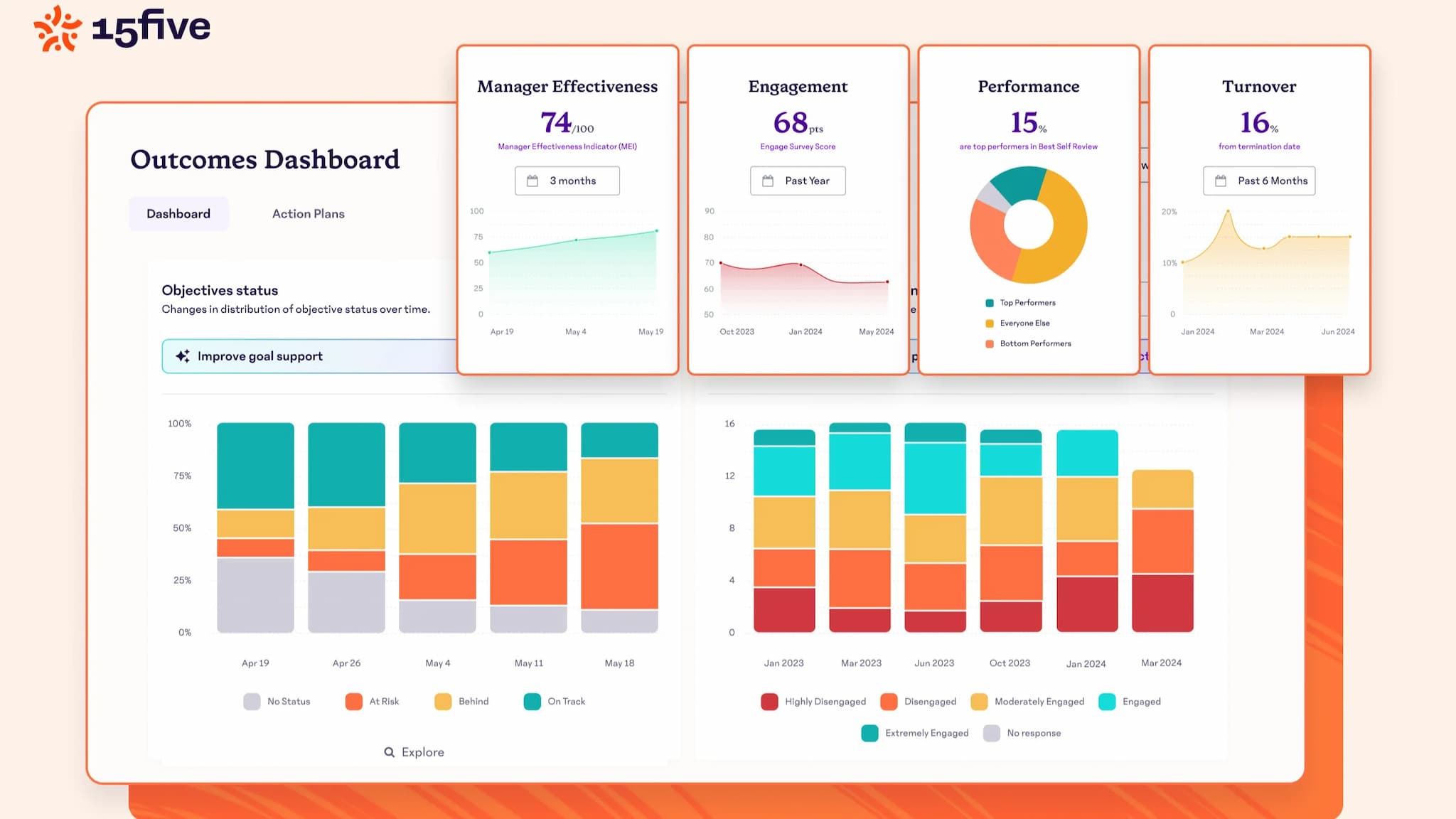
15Five is a complete employee performance management software that helps improve engagement, communication, and productivity in your team. It gives you tools for continuous feedback, 360-degree performance reviews, and goal setting. With 15Five, managers can easily track progress, recognize achievements, and give timely support.
15Five is best for technology companies, software development firms, consulting agencies, healthcare organizations, fintech companies, schools and educational institutions, retail chains, manufacturing companies, and professionals.
Key Features
Weekly Check-Ins, Performance Reviews, OKRs & Goal Management, Continuous Recognition, High Fives, Manager Training Microlearnings, HR Outcomes Dashboard, AI-Powered Coaching (Kona), On-Demand Learning Library (Content), Compensation Management Tools.
Pros and Cons
15Five has a simple and easy-to-use interface, so both managers and employees can navigate it without problems. It also improves employee engagement with pulse surveys and peer recognition.
Some users feel the reports and dashboards cannot be customized enough. The mobile app does not have all the features and may have small bugs.
Pricing - Start from $11 per user/month, and a 14-day free trial is available.
Other Employee Performance Management Platform Tools
- Workday HCM - Best for Large Enterprises
- Zoho People - Best for Medium-Sized Businesses HR Team
- BambooHR - Best for Employee Engagement and Performance Tracking
- Oracle HCM Cloud - Best for Global Performance Management
- UKG Pro - Best for Employee Development and Performance
- Namely - Best for Mid-Sized Company Performance Management
- Sage HR - Best for Performance Reviews and Analytics
- ADP Workforce Now - Best for Integrated Performance and Payroll
- Reflektive - Best for Continuous Performance Improvement
- Paycor Perform - Best for Talent Evaluation Processes in the Service Sector
How to Choose an Employee Performance Review Software
Choosing the right hr performance management tool can feel overwhelming. There are many options out there. Here’s how you can choose the best tool for your team.
Find Your Performance Challenges
Think about the challenges you face now. This will help you pick software with the right features to solve them. Some common challenges include:
- Difficulty tracking goals and progress
- Feedback that is rare, unclear, or inconsistent
- Team goals that don’t match company objectives
- Performance reviews that are not clear or consistent between teams
Identify Who Will Use the Tool
Consider who will use the tool. Think about different user groups and how many licenses you need. You should list the needs of each group, like managers, employees, or HR admins.
For most employee evaluation software, employees will need their own access. Managers and HR administrators will need separate access roles.
Consider Your Budget
Check how much the software will cost. Count your current workforce and predict your growth for the next 5 to 10 years. Most tools charge monthly per employee. This helps you estimate monthly costs early.
Decide on a budget upfront. This way, you won’t waste time looking at employee performance software that is too expensive.
Decide on Important Outcomes
Think about what results you want. Be clear about what success looks like to avoid wasting time. You might want to:
- Have a fully automated performance management cycle
- Compare current and past employee reviews easily
- Use goal tracking and progress monitoring tools
- Increase manager and employee satisfaction with performance reviews
Check for Software Integrations
Decide if your new tool will replace old ones or work with them. Some tools you may want to integrate with include learning management systems, training software, or feedback tools.
Ask yourself:
- Can one tool replace multiple tools to lower monthly costs?
- Are the integrations you need already available or customizable with an API?
Review Technical Requirements
Check if the performance tracking software works with your current workflows and systems. Evaluate what works well now and what problems you need to solve.
Also consider:
- Does it work with your corporate workspace, like Microsoft SharePoint or Google Workspace?
- Does it offer security features you need, like two-factor authentication?
Every business is different. Don’t pick a tool just because it’s popular. Focus on your own challenges. Look for top performance management software that solves your problems so you can get the most out of your investment.
How to Implement Employee Performance Management Tools
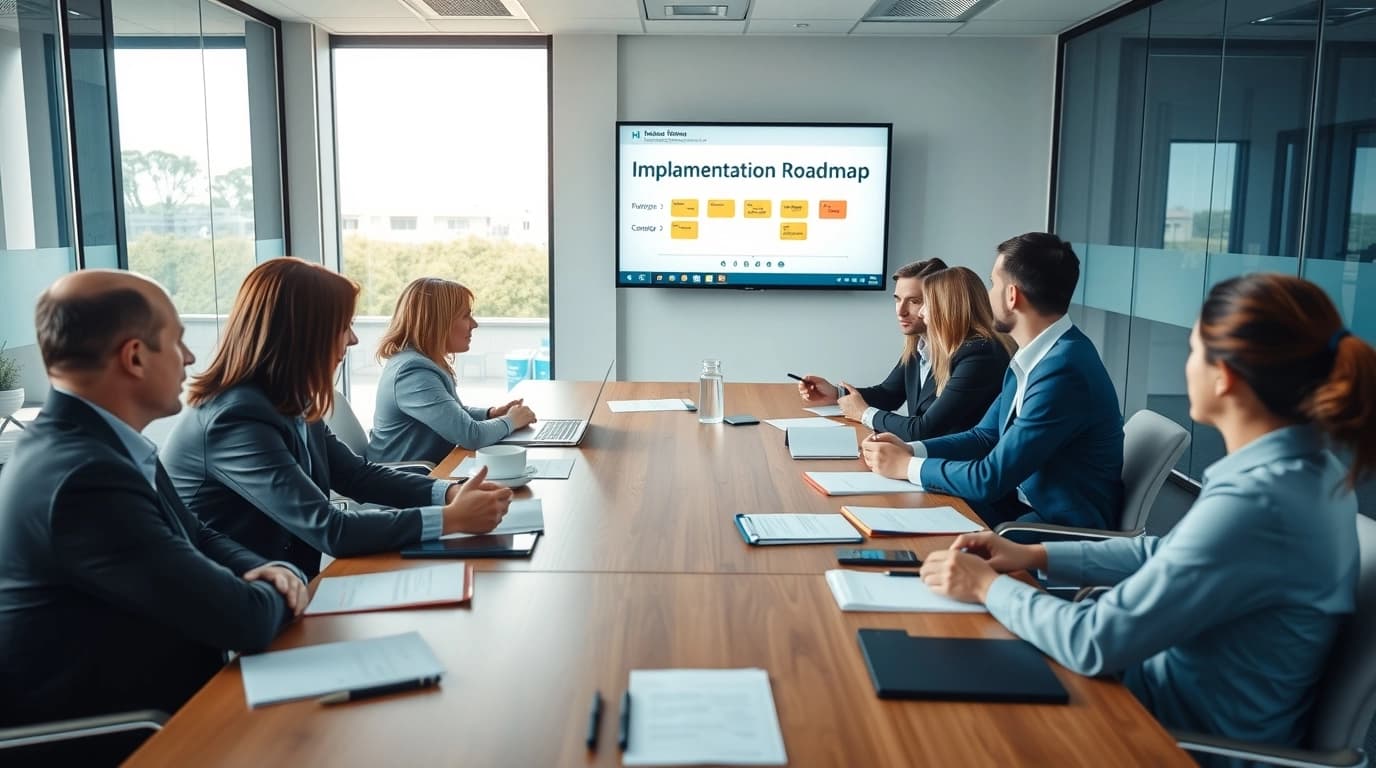
In this section, we’ll share the process of setting up the software, training your team, launching it, and making sure it works well for everyone.
- Develop an Implementation Strategy and Timeline: Start by making a clear plan that explains the who, what, when, where, and why of the new software rollout. This way, everyone knows their role and what needs to be done on time.
- Collect Feedback from Managers and Employees: Talk to managers about the problems they face with the current review system and what could make it better. At the same time, ask employees how they feel about the process and what changes would improve their experience.
- Form an Internal Implementation Team: Build a small team that brings together your HR staff, IT department, managers, and employees. This makes sure all voices are heard, and no group is left out during the rollout.
- Review Existing Performance Data: Check if you need to move old performance data into the new system. If you do, ask your software provider for help. Many providers can upload large amounts of data for you as part of the onboarding process.
- Run Test Scenarios: Try out all the software features before the full launch. Test workflow automations, integrations, and different employee setups, like full-time, part-time, on probation, or employees returning from leave. Also, test employees who report to more than one manager or support multiple teams.
- Provide Role-Specific Training: Train managers and team leads on how to run reviews with the new system. Give employees their own training so they know how to use it. To make things easier later, create FAQs, guides, or even a simple knowledge base that people can check when they have questions.
- Plan Ongoing Support: Make it easy for users to get help. Know who to contact for problems, updates, or questions.
- Launch and Celebrate the Rollout: Launch the software officially and celebrate your team’s effort. It may feel small, but celebrating makes people more excited and more likely to use it.
- Evaluate and Optimize Regularly: After a few months, check how the system is working. Gather feedback and make improvements to keep things running smoothly.
Benefits of an Employee Performance Management System
Here are the main benefits you will get:
- Clear Goal Setting and Alignment: The software makes it easier for managers and employees to set clear, measurable goals. These goals can also connect directly to the company’s objectives, so everyone works toward the same vision instead of just focusing on small tasks.
- Continuous Feedback and Communication: With this software, you don’t have to wait for the yearly review. Managers can share feedback anytime, and employees can also share updates or raise concerns. This two-way communication builds trust and helps improve relationships.
- Improved Productivity and Focus: Since goals, feedback, and progress are all in one place, employees stay focused and motivated. Small achievements are noticed, and problems get solved faster, which leads to better performance overall.
- Higher Employee Engagement and Retention: When employees see their hard work being tracked, recognized, and rewarded, they feel more valued. This makes them more engaged in their work and less likely to leave the company.
- Data-Driven Insights for Better Decisions: Managers and HR teams can use reports and analytics to understand performance trends, identify top talent, and see who might need more support. These insights also make promotion and training decisions more fair.
- Fair, Transparent, and Consistent Reviews: Traditional reviews can sometimes feel biased. Performance management software uses data and clear metrics, making reviews more fair and consistent for everyone.
- Easy Integration with Other Tools: Most performance management systems can connect with HR, payroll, project management, and communication tools. This way, tracking performance becomes part of daily work instead of an extra task.
- Saves Time for HR and Managers: The software automates tasks like scheduling reviews, sending reminders, tracking progress, and creating reports. This saves hours of manual work and gives managers more time to coach and support employees.
- Better Training and Development: The staff performance management system shows where employees have skill gaps or need extra training. Managers can then plan the right training programs to help them improve and grow quickly in their roles.
- Supports Remote and Hybrid Teams: Many companies now have remote or hybrid teams. Employee performance management software makes it simple to track, review, and support employees no matter where they are working from. Everyone stays connected and accountable.
- Improve Company Growth: When employees are motivated, engaged, and aligned with company goals, business results improve, too. Strong performance management leads to higher productivity, better teamwork, and stronger company growth.
Frequently Asked Questions
What is the best performance management software?
The best performance management software depends on what your company needs, your team size, and your budget. Look for software that helps you track goals, give continuous feedback, measure employee performance, and create reports. Make sure it works with your HR, payroll, and project management tools. A system that is easy to use and helps your employees grow usually works best for most companies.
How often should performance reviews be done?
Traditionally, reviews were done once a year. But many companies now prefer quarterly or monthly check-ins. Frequent reviews help you catch issues early, track progress, and keep employees engaged.
How do performance tools work for remote or hybrid teams?
Modern performance management measurement tools are made for remote and hybrid teams. They let you track goals, monitor progress, and give feedback online.
What is continuous feedback, and how can software help?
Continuous feedback means giving employees regular input on their work, not just once a year. Employee evaluation system software helps you give instant feedback, track achievements, and record progress over time.
How do performance platforms keep data safe and private?
Good performance management platforms use encryption, secure logins, and access controls to protect employee information. Many also follow laws like GDPR to handle personal data safely.
What integrations should you look for in performance software?
Look for integrations with tools such as HR systems, payroll apps, project management tools, or communication platforms.
How do I measure the ROI of a performance management system?
To measure ROI, track metrics like productivity, goal completion, engagement, and retention. Compare these before and after using the software.
Can performance management tools help with succession planning?
Yes. Performance and monitoring tools can help you spot high-potential employees. They track skills, achievements, and career goals.
What reporting and analytics features matter most?
Look for dashboards that show individual and team performance, goal progress, skill assessments, and trends. Customizable reports help managers make better decisions and find improvement areas.
What is the best employee performance management software in Dubai?
The best software is cloud-based, mobile-friendly, and helps you give feedback, track performance, and create reports. If you want a dedicated solution, you can explore TechForing Human.
Which software is widely used for managing performance management systems?
Many companies around the world use software such as Workday, BambooHR, and Zoho People. TechForing Human is also best for managing performance.
What are the 5 C's of performance management?
The 5 C's of performance management are:
- Clarity - Make sure employees understand their goals, tasks, and responsibilities.
- Consistency - Give feedback and reviews regularly to track progress and stay fair.
- Communication - Keep open talks between managers and employees so everyone is on the same page.
- Coaching - Guide employees, give advice, and help them improve.
- Commitment - Both managers and employees should stay dedicated to achieving goals and growth.
What are the 4 pillars of PMS?
The 4 pillars are:
- Goal Setting - Set measurable objectives that match your company’s strategy.
- Continuous Feedback - Give feedback regularly to fix problems and recognize achievements.
- Performance Appraisal - Do formal reviews to check results and work on weaknesses.
- Employee Development - Give training, mentoring, and career growth opportunities to improve skills and prepare employees for future roles.
Final Thoughts
We hope the article got you one step closer to finding the right performance management tool for your organization.
Remember, the best performance evaluation software can improve productivity, keep employees motivated, and help your team grow together.
If you want to make performance management simple and effective, TechForing Human is the all-in-one solution for you.
