
Category: Articles
5 Best Talent Management Systems for Businesses
TABLE OF CONTENT :
Finding the right talent management software can feel like searching for a needle in a haystack. A wrong choice can slow down growth and frustrate the candidate.
In this guide, you will learn how to select the best talent management system for your business. You will see the must-have features that truly improve your organization.
What Is Talent Management System?
A Talent Management System (TMS) is a software platform that helps you manage employees' journey, such as recruitment, onboarding, performance management, learning, and development in one place.
A TMS keeps your HR processes organized, saves time on administrative work, and gives you data-driven insights to make better decisions about hiring, employee growth, and retention.
How Does a Talent Management System Work?
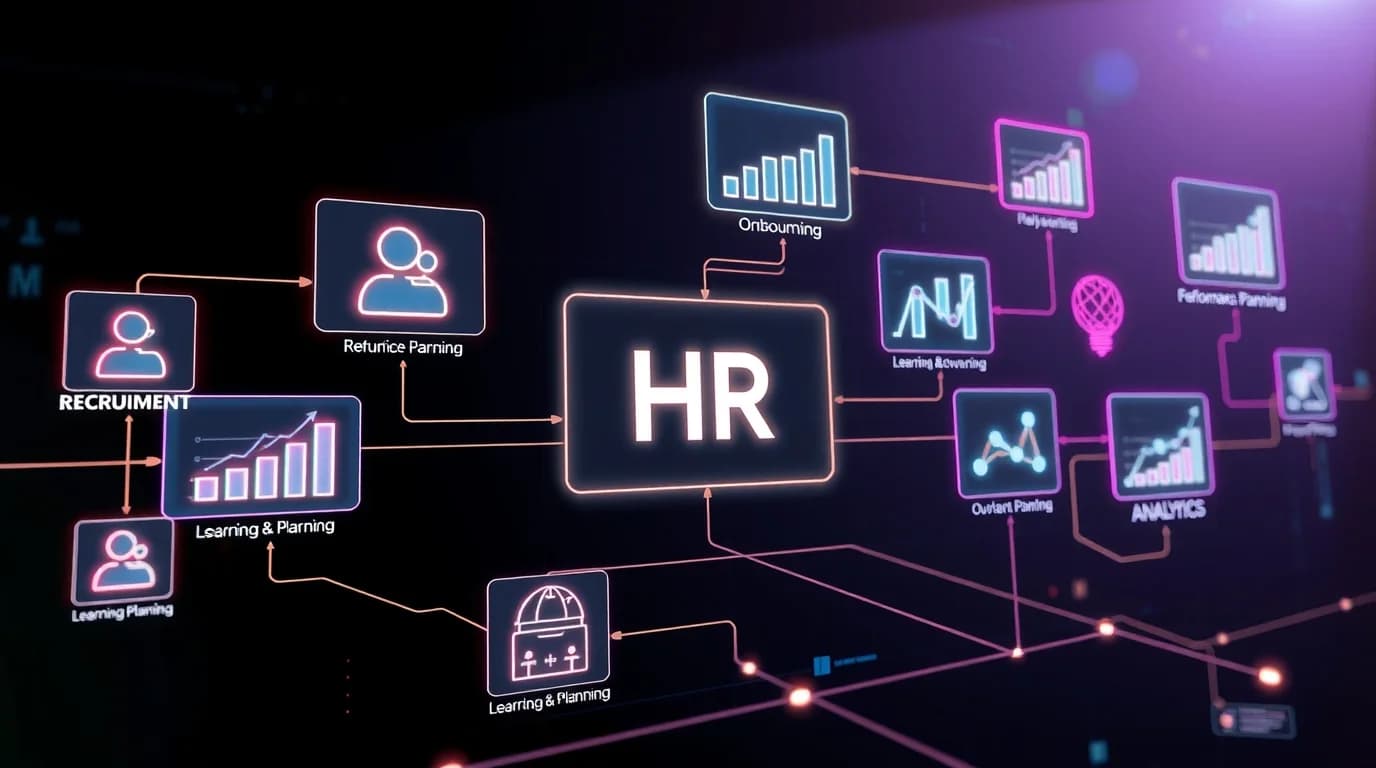
A TMS works through specialized modules that handle different HR tasks:
- The ATS helps manage job openings, applications, and candidate communication. HR teams can post jobs on multiple channels, screen resumes, and schedule interviews.
- The onboarding module guides new employees through document submission, policy acknowledgment, compliance training, and initial goal setting.
- Performance Management tracks employee KPIs, sets SMART goals (Specific, Measurable, Achievable, Relevant, Time-bound), and conducts appraisals.
- Learning and Development (L&D) modules often include a learning management system (LMS) that tracks skills, assigns training programs, and manages certifications.
- Succession planning identifies high-potential employees and prepares them for leadership roles.
- Analytics modules collect data from all TMS functions. HR teams can track turnover rates, engagement levels, performance trends, and productivity.
Top Talent Management Solutions in 2025
Here are 5 talent management software to consider:
- TechForing Talent
- BambooHR
- ADP
- Deel
- Lattice
01 # TechForing Talent
TechForing Talent helps your company find and hire the right people quickly. The platform gives you one place to manage the whole hiring process from posting jobs to onboarding new employees.
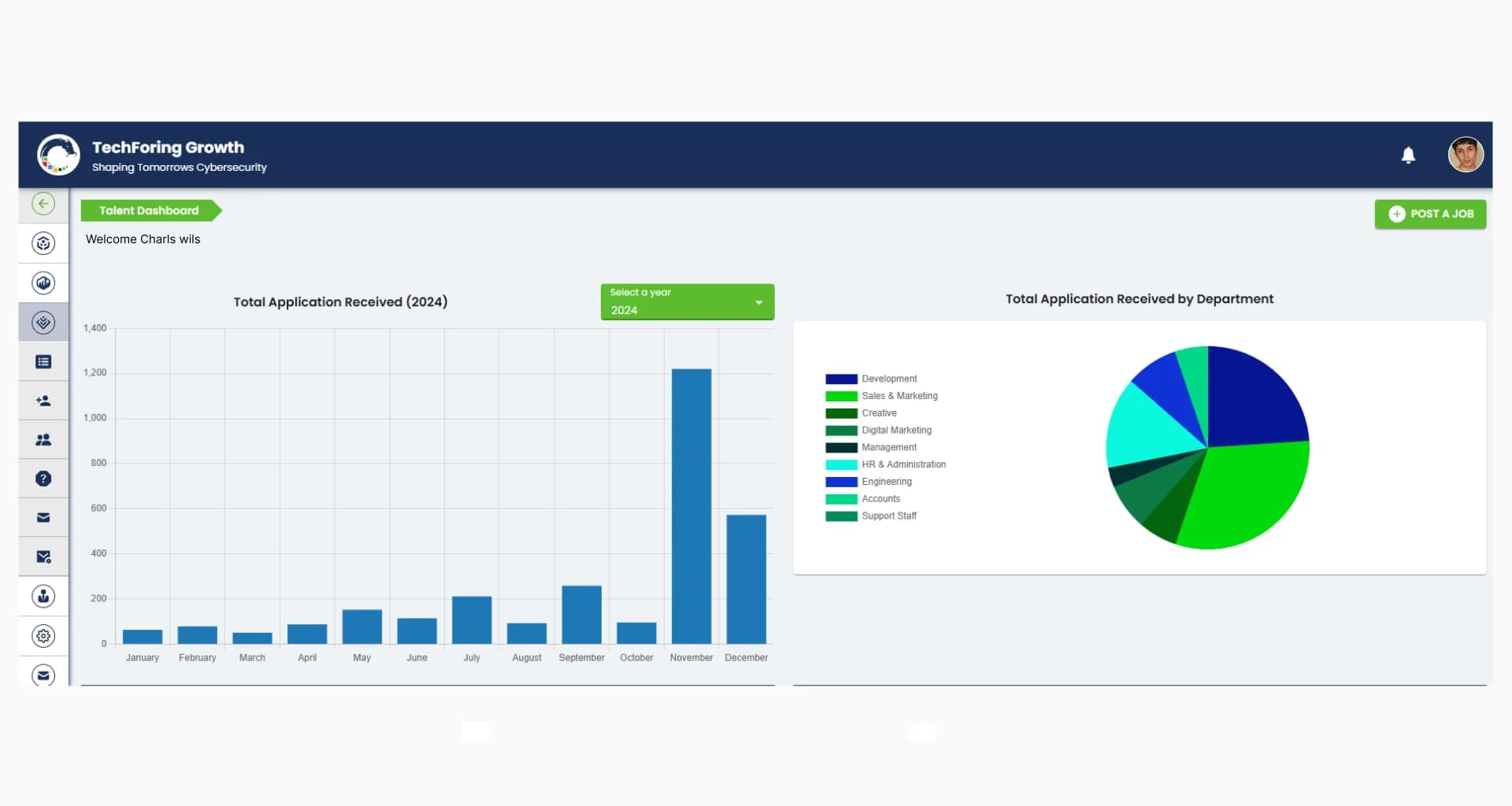
AI tools help you sort and screen resumes in seconds, so you save hours of manual work. The system also supports online and practical tests for skill checks before hiring.
Key Features:
- Dynamic job board with automated posting
- AI-driven resume screening and candidate sorting
- Centralized applicant tracking
- Online and practical skill testing
- Automated document verification and onboarding
- Candidate support and feedback tools
- Smart analytics and reporting dashboard
Prices start at $99/month, and you can ask for a custom quote based on your company size, number of users, and features you need.
TechForing Talent works well for tech startups, outsourcing firms, call centers, and global businesses, and remote hiring.
02 # BambooHR
BambooHR is a cloud-based human resources talent management software that helps you manage employees, payroll, time, and benefits all in one place.
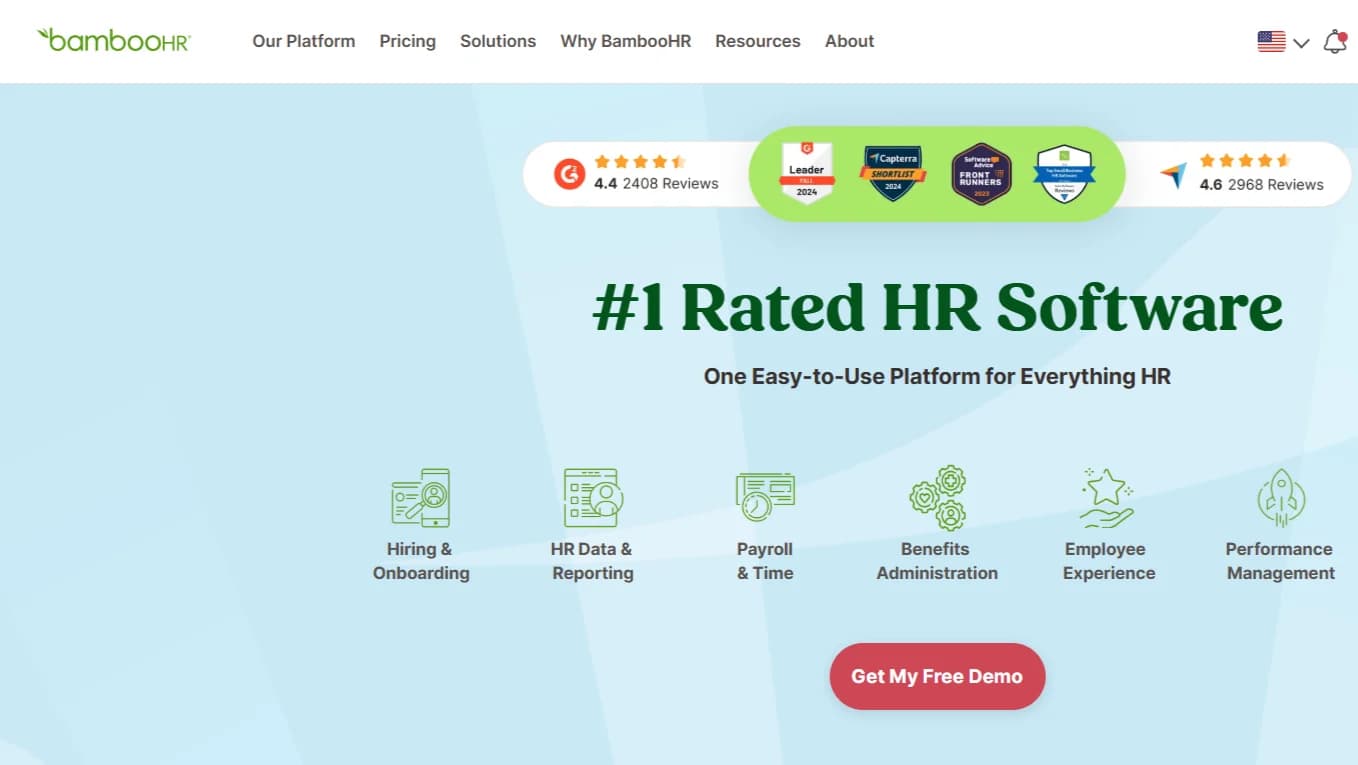
You can store employee records, run hiring and onboarding processes, track time off, handle benefits, and get HR analytics.
Key Features:
- Employee Records & HR Database
- Custom Reports & Dashboards
- Workflows & Approvals
- Hiring & Onboarding
- Time-Off & Benefits Tracking
- Performance Management & Employee Experience
- Integrations & Open API
- Mobile Access
- Add-On Modules (Payroll, Benefits, Time Tracking)
BambooHR pricing starts at $10 per employee per month. Some pricing details require a quote, so costs are not always clear upfront.
Large-sized companies typically need to pay between $15,000 and $120,000 per year, depending on employee count and add-ons.
BambooHR works best for mid-sized and large-sized companies, Technology, IT services, Marketing, and advertising firms.
03 # ADP
ADP offers a complete talent management and human capital management (HCM) solution. You can hire, develop, engage, and pay the best talent using a single platform.
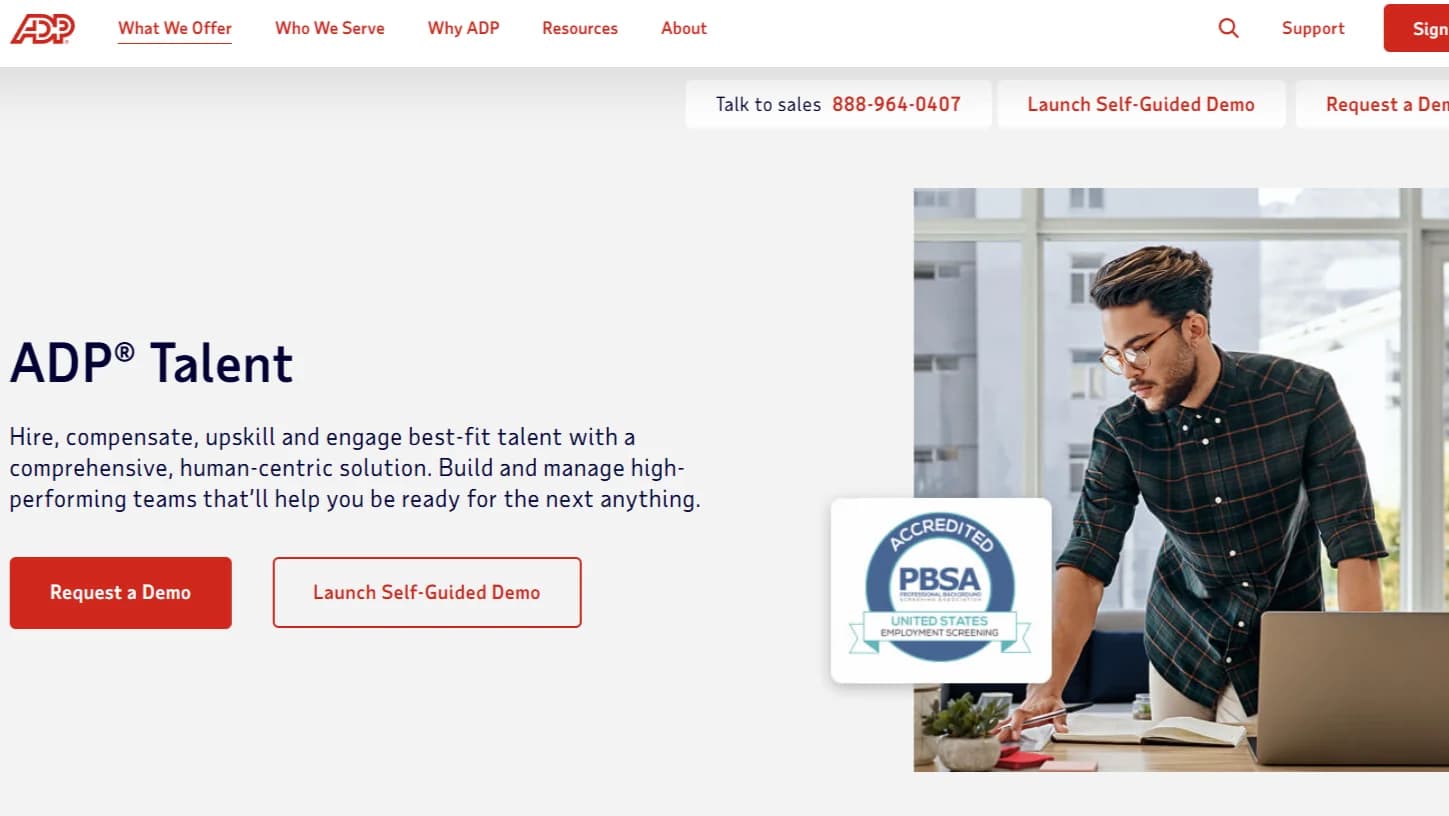
ADP covers the entire employee journey, from recruitment to performance management and retention. You can manage every part of the talent lifecycle through a human-centered system.
Key Features:
- Performance & Team Management
- Learning & Development
- Compensation Management
- Succession Planning
- Recruiting & Onboarding
- Analytics & Benchmarking
- Integration with HR/Payroll
Pricing does not appear on the ADP site. You need to request a demo to get a full quote. Smaller companies may need to check if modules match their budget and complexity.
ADP works best for Technology, financial services, manufacturing, professional services, and large retail companies that need full lifecycle talent management.
04 # Deel
Deel serves as a global HR talent management platform that helps companies hire, onboard, pay, and manage employees and contractors in over 150 countries.
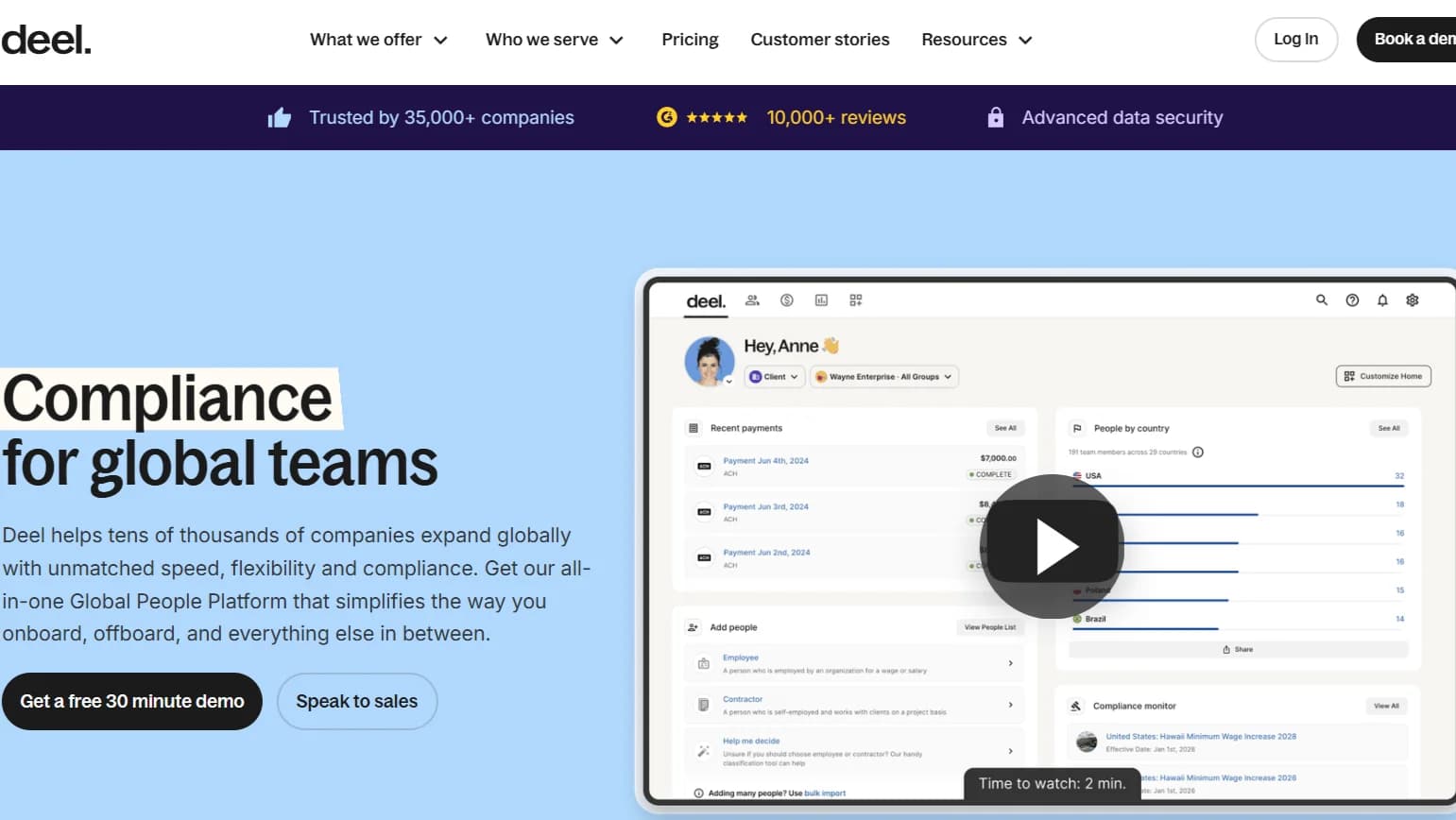
Deel allows you to handle global compliance, payroll, HR operations, and talent management all from one place.
Key Features:
- HRIS Platform
- Global Payroll & Compliance
- Modular Setup
- Workflow Automation & Analytics
- Talent Management (Deel Engage)
- Mobile App
- Document & Verification Tools
- Integrations
Deel provides a mobile app that allows access to payslips, contract signing, time-off requests, and more, with Face ID, fingerprint login, and offline access.
Deel recently added AI features, including “Deel AI,” which answers HR questions, generates reports automatically, and guides compliance.
Pricing depends on the modules selected, the number of employees or contractors, and the country of operation.
Deel works best for companies such as tech and SaaS companies, start-ups, consulting and creative agencies, and large enterprises with global or distributed teams.
05 # Lattice
Lattice offers a cloud-based HR talent management system platform that helps companies manage people, pay, and performance in one place. Lattice calls itself “the HR platform people love” and serves over 5,000 customers worldwide.
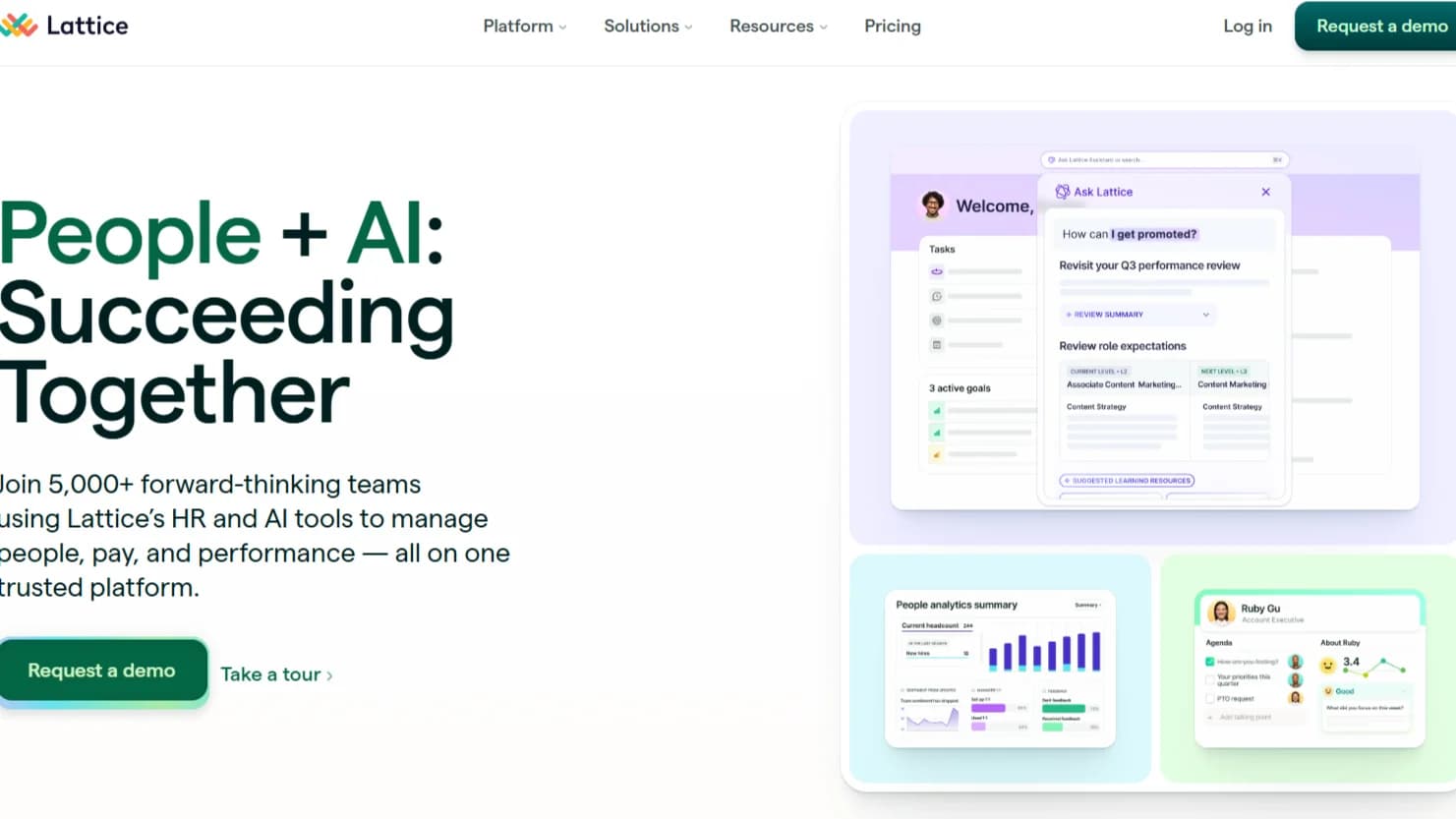
The platform uses AI tools to assist HR teams, managers, and employees. Lattice allows companies to track performance, manage engagement, and support career growth.
Key Features:
- AI Agent (Lattice AI Agent)
- Performance Management
- Goal Setting & OKRs
- Succession Planning
- Engagement & Surveys
- Payroll Management
- HRIS / Employee Data & Workflows
- Analytics & Dashboards
- Integrations with Other Tools
Lattice combines HR, performance, and pay in one platform, so you do not need multiple systems.
The Talent Management plan starts at $11 per user per month when billed annually. You can add Engagement for $4 per user per month and Compensation for $6 per user per month.
Lattice charges depend on features, user count, and contract length, so you need to request a quote for exact costs.
Lattice works best for mid-sized businesses and enterprises, Technology and IT services companies, consulting and marketing agencies, and remote teams.
Related Blog - 20 Best Talent Management Software Reviews
Benefits of Talent Management System

Many companies struggle with separate tools that fail to share data. A TMS solves that problem by joining everything together in one place.
Here are the 07 key benefits you get when you use a top TMS.
Shared and Centralized Data
Siloed data makes HR work harder and blocks smart decisions. A TMS brings all information into one connected system. You can see performance scores, learning records, and career goals together in one dashboard.
Shared data helps you find trends and predict future outcomes. You can use analytics to spot early signs of low engagement or possible turnover. Quick action saves talent before problems grow. Unified data connects talent planning directly with business success.
Better Hiring and Recruitment
A TMS creates a stronger hiring engine. You can attract the right people with skill-based planning and smart recruitment tools. AI helps with postings, candidate screening, and scheduling. Recruiters spend more time connecting with people and less time on admin work.
Managers can work with recruiters to make sure every new hire fits the company's goals. A smoother process means higher offer acceptance and a better employer brand. You can fill roles faster and build teams that perform better.
Stronger Employee Retention
Keeping top talent is one of the hardest parts of HR. A good TMS tracks engagement, performance, and learning in real time. You can see who might feel unmotivated or ready to leave. The system supports growth paths that match each person’s goals and rewards real progress.
Employees feel seen, valued, and supported in their journey. A personalized plan helps them stay longer and grow stronger within the company. You can build a culture that values commitment and results.
Enhanced Employee Experience
Employee engagement remains low in many companies. A TMS helps you fix that by becoming a digital home for the whole employee experience. New hires can watch welcome videos, join virtual tours, and select their work setup through custom portals.
Employees can check goals, reviews, rewards, and learning paths from one place. Access feels simple, and communication stays clear. A strong connection starts from day one and keeps people engaged at every step.
Modern Employee Development
Growth opportunities play a big role in how long employees stay. Surveys show 95% of staffers would stay longer if their company invested in learning. A TMS uses AI to study each person’s role, performance, and goals.
Employees receive smart course ideas, such as “others in similar roles also learned…”. Learning becomes part of everyday work. Personal development improves confidence, skills, and loyalty. A strong learning culture helps you build leaders from within.
Strategic Workforce Planning
Strong planning helps companies stay ready for future changes. Skilled employees in key roles can produce up to 700% more than average employees. A TMS with AI maps current skills, predicts future needs, and finds employees who can grow into bigger roles.
You can build internal talent pipelines and reduce the cost of outside hires. The organization becomes more flexible and prepared for new challenges. Clear visibility helps you make faster and smarter workforce decisions.
People-First Performance Management
Companies that focus on people perform much better. Research shows people-focused organizations earn 35% higher revenue and have 6% lower attrition. A TMS helps you move away from annual ratings and create a culture of regular feedback.
You can set goals, align OKRs, and run quick check-ins for every team. Transparency in performance builds trust and drives motivation. When people feel recognized, they push harder and deliver more.
Read about AI in Talent Acquisition
How to Choose the Best Talent Management System for Your Organization
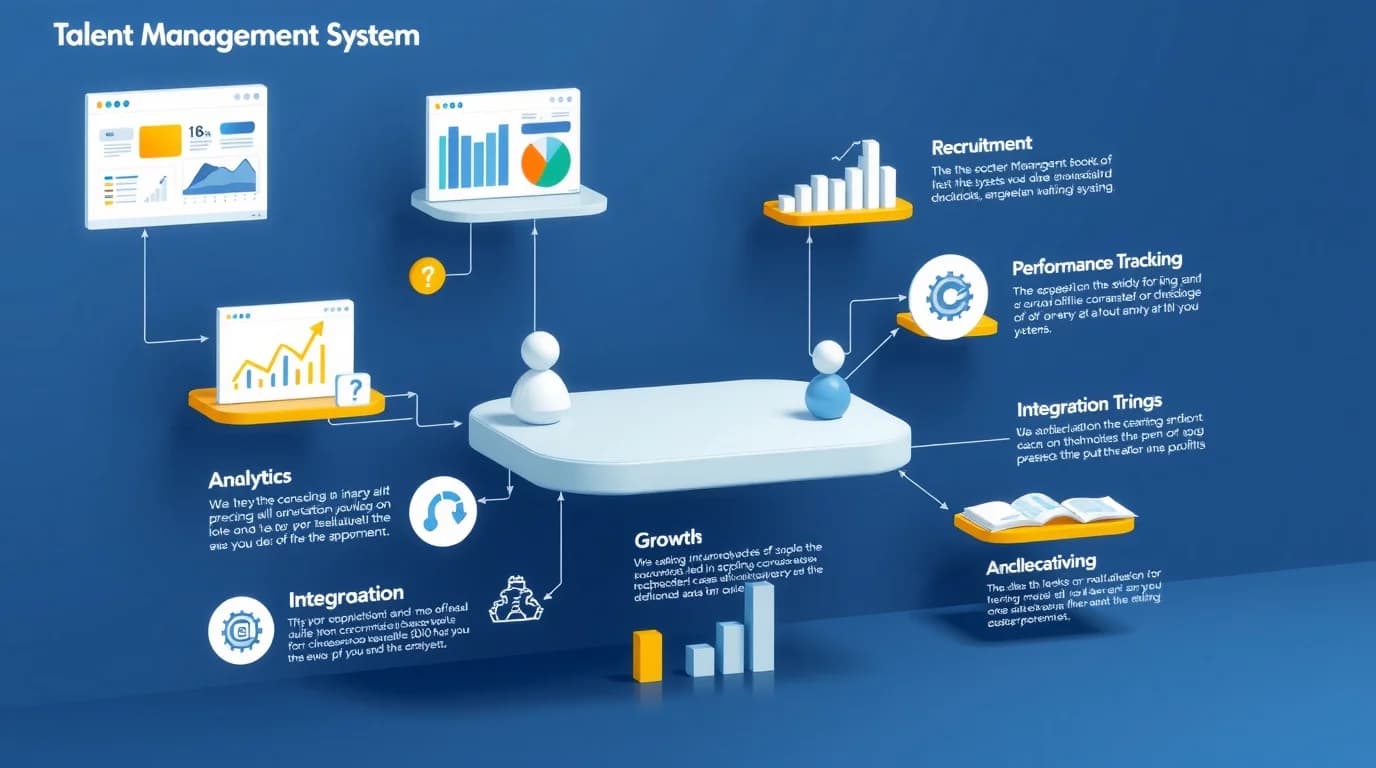
Selecting a talent management system (TMS) is a strategic choice that shapes how your organization attracts, develops, and retains top talent.
With hundreds of options available, the selection process can feel overwhelming.
Here’s a detailed guide to help you pick the best talent management software for your organization.
01 # Identify Your Organization’s Needs
At first, try to understand the challenges you want to solve. Are you struggling to access employee data, manage candidates, or conduct meaningful performance reviews?
Knowing the problems helps you choose the features and tools your TMS must provide.
- Avoid selecting software that only solves today’s issues but cannot support growth.
- Avoid paying for features you do not need or will not use.
Collect feedback from HR, IT, finance, and management. Use the feedback to write use cases and build a matrix showing what each group considers most important.
Decide who needs access. Most systems require employee-level access for everyone, with special permissions for managers and HR administrators. Rank priorities for power users, managers, and employees to make sure all needs are met.
02 # Match Software to Your Industry and Culture
Every organization has unique needs, and your TMS should match your industry and company culture.
Look for software with features designed for your sector.
- Healthcare - Track regulatory compliance, credentials, and clinical performance.
- Retail - Track sales metrics, seasonal staff, and flexible schedules.
Choose a system that fits workflows and company culture without forcing big changes. Pick software with scalable modules and dashboards that show the right data quickly.
03 # Ask the Right Questions to Vendors
A demo alone does not reveal everything. Ask vendors focused questions to see how the software performs for your organization:
- How often do updates occur, and do they affect workflows?
- What training and support do you provide after launch?
- Can the software scale as our company grows?
- Does it connect smoothly with HR, payroll, and other systems?
- Can you offer a trial so we can test the user experience?
A strong vendor shows case studies, connects you with other customers, and partners with you for the long term.
Tip - Run pilot projects with a small team before full investment. Test usability, adoption, and return on investment in real-world conditions.
04 # Understand the Implementation Timeline
Implementation can determine how successful the system becomes.
Rolling out new software takes time, especially for complex systems. Map goals and set clear phases.
- Ask vendors for timelines from similar companies in your industry.
- Make sure the vendor meets deadlines without cutting corners.
Tip - Use a phased approach with clear steps, responsibilities, and milestones to keep the launch on track.
05 # Check Integration Capabilities
Your TMS must work well with your other tools. Employees switch apps many times a day, and poor integration slows work.
Look for software that:
- Syncs with HRIS, payroll, and performance tools
- Offers single sign-on and open APIs
- Centralizes data to prevent errors and double entry
Good integration creates smoother operations and higher efficiency.
06 # Focus on Analytics and Reporting
Data-driven insights make talent acquisition and talent management valuable. Analytics help track performance, forecast needs, and measure return on investment.
Key features to look for:
- Real-time dashboards and customizable reports
- Visibility into turnover, goal completion, hiring efficiency, and other key metrics
- User-friendly tools for non-technical HR staff
Clear data helps you make better decisions and improve workforce results.
07 # Plan for Growth and Scalability
Choose a system that supports your long-term hiring and talent management goals.
Look for:
- Flexible plans that grow with your organization
- Multi-country compliance and language support for global hiring
- Modular design to add features as needs change
Tip - Small HR teams should start with an all-in-one system. Add specialized tools later as your needs grow.
How Talent Management Systems Differ from Performance Management Systems?
Talent Management Systems (TMS) and Performance Management Systems (PMS) serve different roles in HR. A TMS manages the entire employee lifecycle, including hiring, onboarding, learning, development, succession planning, and retention.
Companies use TMS to attract, grow, and keep top talent while supporting long-term business growth. TMS takes a strategic approach to ensure employees stay engaged, gain new skills, and prepare for future roles.
A PMS focuses on evaluating and improving employee performance. Managers use PMS to set goals, track progress, give feedback, identify gaps, and reward high performers.
PMS takes a tactical and short-term approach to make sure employees meet company objectives and deliver results. Many companies include PMS as part of a larger TMS. Performance data from PMS helps plan promotions, training, and succession decisions.
Frequently Asked Questions
What Are the 3 C’s of Talent Management?
The 3 C’s include Competence, Commitment, and Culture. Competence means the skills and abilities employees have. Commitment refers to motivation and engagement in their work. Culture reflects how employees align with company values and environment.
What are the 4 Pillars of Talent Management?
The 4 pillars include Attract, Develop, Retain, and Engage employees. Attract focuses on hiring the right talent. Develop builds skills and knowledge. Retain ensures employees stay with the company. Engage keeps employees motivated and involved.
What are the 5 core functions of talent management?
The 5 core functions include Recruitment, Onboarding, Performance Management, Learning & Development, and Succession Planning.
Can a TMS support global or remote teams effectively?
Yes. Modern Talent Management System TechForing Talent handles global compliance, remote onboarding, and collaboration for distributed teams.
How much does a Talent Management System typically cost?
Pricing depends on platform, features, and employee count.
What are the best talent management companies?
Top talent management software solutions in 2025 include TechForing Talent, BambooHR, ADP, Deel, and Lattice.
On a Final Note
A TMS can boost productivity and help you build a team that grows with your company. A modern TMS brings all HR functions into one place.
You can handle recruitment, onboarding, performance tracking, learning, and succession planning without extra effort.
If your goal is quicker hiring and smarter HR management, TechForing Talent gives you the complete solution.
